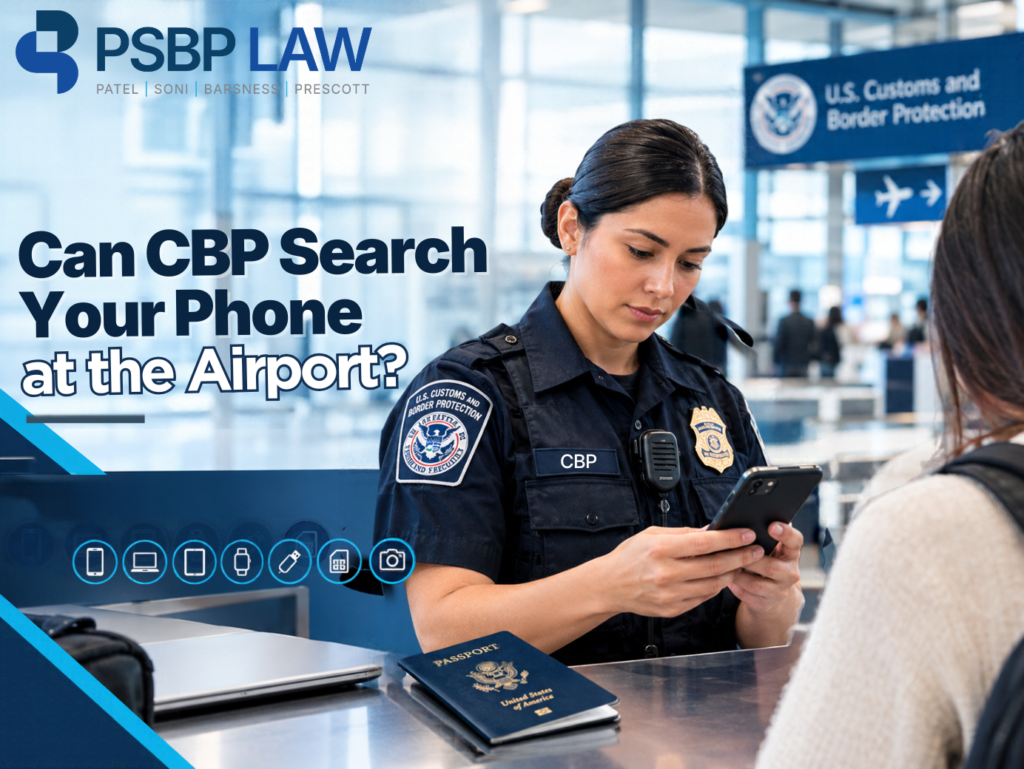
Short answer: yes. When you arrive in the United States, U.S. Customs and Border Protection (CBP) officers can inspect your phone, laptop, tablet, and other electronic devices, and in most cases they do not need a warrant or any suspicion to do it. That is true whether you are a U.S. citizen, a green card holder, or a visitor.
Most travelers will never have their phone searched. But the number of searches is rising, the rules were updated this year, and for noncitizens, what an officer finds on a phone can affect whether they are allowed into the country. Here is what you need to know before your next trip.
Why the Border Is Different
Inside the country, police generally need a warrant to search your phone. The border is an exception. Courts have long recognized that the government may inspect people and belongings entering the country to enforce customs and immigration laws, and that authority extends to the data on your devices. It applies at airports receiving international flights, at land and seaports of entry, and to outbound travel as well.
Basic vs. Advanced Searches
CBP’s rules, set out in CBP Directive No. 3340-049B (effective January 1, 2026), divide device searches into two types:
| Basic search | Advanced search | |
|---|---|---|
| What it is | An officer looks through your unlocked phone by hand: photos, messages, apps, files. | An officer connects equipment to copy or analyze the contents of your phone. |
| Suspicion needed (CBP policy) | None. | Reasonable suspicion of a violation of law CBP enforces, or a national security concern. Supervisor approval required. |
| How common | About 92% of device searches in FY 2025. | About 8% of device searches in FY 2025. |
Figures based on CBP’s FY 2025 device search statistics as reported in October 2025.
The new directive also clarifies that a “electronic device” means any device that may hold digital information, which can include smartwatches, flash drives, SIM cards, and cameras, not just phones and laptops.
Why This Matters Especially for Noncitizens
Officers may use what they find to evaluate whether your travel matches your visa. For example:
- A visitor whose messages discuss starting a job in the U.S.
- A student whose texts suggest they are not attending school
- A traveler whose photos or messages contradict what they told the consular officer or CBP
Inconsistencies like these can lead to secondary inspection, cancellation of a visa, or refusal of admission. The best protection is simple: make sure the purpose of your trip, your visa, and your documents all match, and always answer truthfully. Never lie to a CBP officer. False statements can create a permanent bar to future immigration benefits.
What the Courts Are Saying in 2026
Several federal appeals courts have ruled this year, and the trend favors the government. The Seventh Circuit (United States v. Eta, July 2026), the Fourth Circuit (United States v. Belmonte Cardozo, July 2026), and the Second Circuit (United States v. Alisigwe, September 2026) each held that officers may search a phone by hand at the border with no warrant and no suspicion.
Courts remain divided on whether forensic, or advanced, searches require reasonable suspicion, and some judges continue to argue that a phone deserves more protection than a suitcase. This issue may eventually reach the U.S. Supreme Court. For now, travelers should assume a manual search can happen at any time.
Practical Tips Before You Travel
- Back up your phone before you travel in case a device is detained.
- Keep your story consistent. Your documents, your answers, and the purpose of your trip should line up.
- Identify privileged material. If your phone holds communications with your attorney, tell the officer so they are handled under CBP’s privilege procedures.
- Talk to an attorney before traveling if you have a pending immigration case, a past immigration or criminal issue, or have spent long periods outside the U.S.
Questions? Email Attorney Natalia Meade at nmeade@psbplaw.com
This article is for general information only and is not legal advice. Reading it does not create an attorney-client relationship. Immigration rules change frequently; consult an attorney about your specific situation.