Private credit built its reputation on speed and flexibility, offering direct relationships to borrowers, fast underwriting, and terms traditional banks could not match. Now that same reputation is colliding with regulators who have decided the asset class deserves a closer look, and the managers caught unprepared are the ones who will pay the price. If you run a private credit fund, the decisions you make now about valuation, fees, liquidity, and governance will determine how you fare when examiners come calling. Here is what every private credit fund manager needs to know, and how our team can help you get ahead of it.
Why the SEC is Closely Watching Private Credit
The convergence of a few changes within the market led the SEC to take a harder look at a private credit. First, more investors have access to alternative investments compared to years prior when primarily only sophisticated institutions had the ability to invest. This level of access is expected to expand, especially if proposed rules such as the Department of Labor’s proposed rule democratizing access to alternative investments in 401(k) plans passes. Second, the credit cycle turned with defaults climbing across parts of the leveraged loan and direct lending markets. With headlines on over collateralized test failure at a private credit CLO, a fund merger falling apart amid liquidity pressure, and questions about whether some managers are marking distressed positions more generously than the underlying credit deserves, regulators have felt pressure to turn their attention to the issues. Third, valuations are opaque with fund managers setting their own process since private credit is not marked to a public market the way investments like a bond or syndicated loan is. This risk is amplified when retail and retirement money is in the investor mix. Newer, less sophisticated capital combined with self-marked assets and a turning credit cycle is exactly the combination that draws regulator attention.
Comments by the SEC
As stated by SEC Chairman Paul Atkins, “the SEC is closely monitoring both the lending gap that private credit has filled and the emerging pressures that it has experienced, including elevated redemption requests and rising default rate projections.” He also specifically addressed that opacity in the private credit space can be an issue and emphasized that valuation, transparency, and credit quality are key.
Additionally, the Division of Examinations’ Fiscal Year 2026 priorities released in November 2025 include a significant structural change with private fund advisers no longer having their own standalone section. Many interpret this omission as the private fund risk folding into the mainstream compliance conversation instead of treated as a niche concern. Within the released priorities, the Division specifically names private credit and private funds with extended lock-up periods and directs examiners to test whether advisers’ recommendations and disclosures hold up on cost, liquidity, risk, and how hard it is to redeem or take money out.
What This Means for You
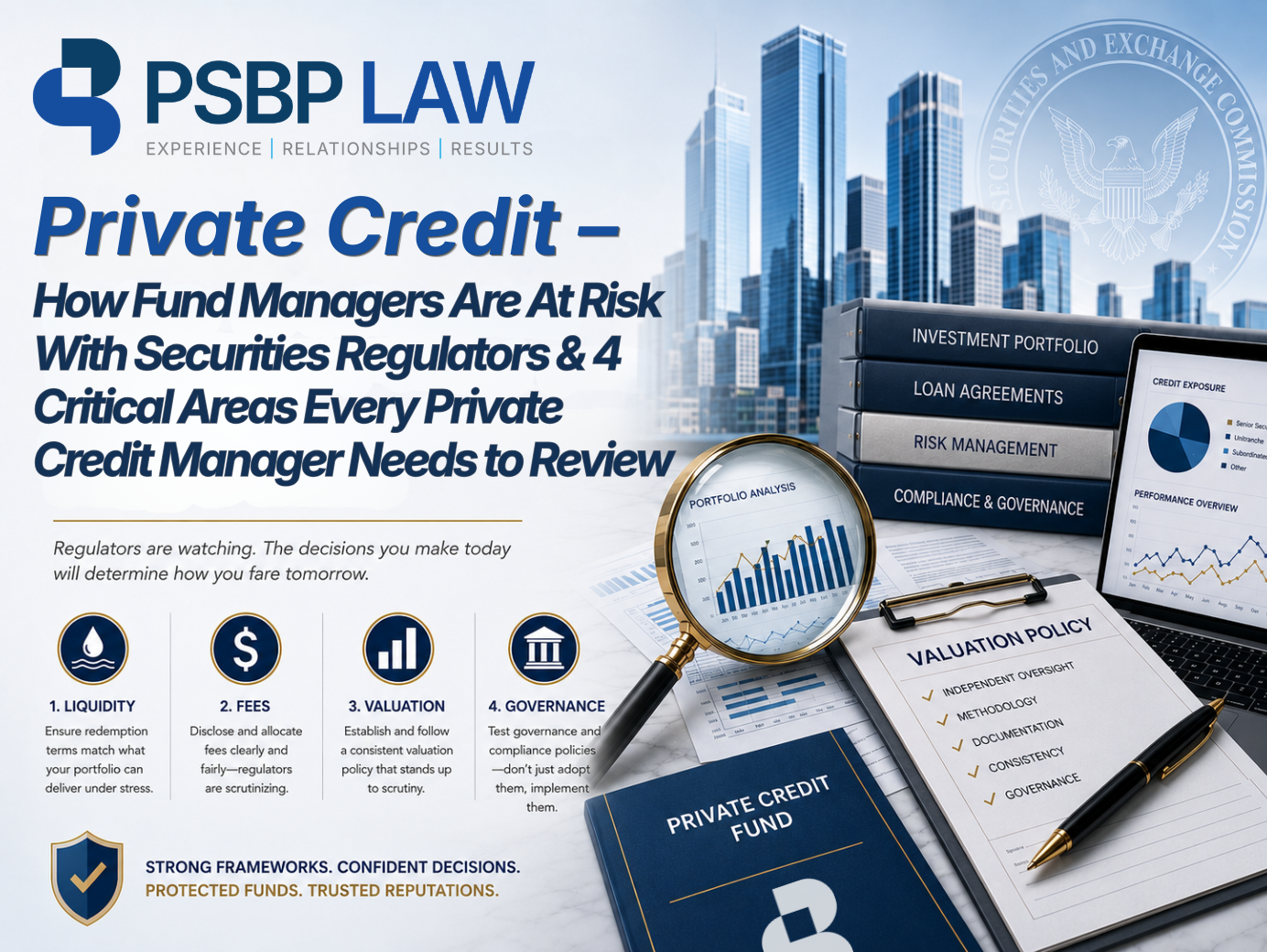
Through the headlines and regulator commentary, four main areas emerge as terms and policies you should pay greater attention to: (i) liquidity, (ii) fees, (iii) valuation, and (iv) governance. First, if your fund offers any kind of periodic liquidity, disclosures must match what the investment portfolio can actually deliver under stress. Second, how you calculate and allocate management fees, performance fees, and other fees should be clearly and fully disclosed, especially with the scrutiny fees are currently receiving by regulators. Third, you need to establish a valuation policy that is consistently followed and applied across the portfolio and across time. Fourth, the Division of Examinations’ priorities made clear that governance policies need to actually be tested and implemented rather than merely adopted.
When launching your private credit fund (or assessing the policies and procedures of your current fund), think through the following:
-
Review your valuation governance: Consider who conducts the valuation, how valuations are determined, and whether marks are moving in step with credit deterioration in the portfolio.
-
Revisit allocation of fees and expenses: Ensure you have a clear process for the allocation of fees and expenses.
-
Stress test liquidity terms against the actual portfolio: Test whether you can fulfill the redemption and withdrawal terms promised under stressed conditions, rather than the optimistic assumptions contained in a marketing deck.
-
Test your compliance program: Implement periodic testing of valuation, fee, and liquidity controls and maintain records demonstrating that you did so.
The Bottom Line
The SEC has not called private credit a systemic risk, and Chairman Atkins has made clear he does not want to kill an asset class that is filling a real market gap. However, the message to fund managers is unmistakable: regulators are watching private credit more closely than ever, and examiners will spend more time probing these issues. The managers who thrive will be the ones who build valuation, fee, and liquidity frameworks that hold up under scrutiny, document their decisions as they make them, and test their programs before someone else does.
Do not leave your fund exposed. Whether you need to structure a valuation policy, tighten your fee and expense allocations, stress test your withdrawal procedures, or build a compliance program that stands up to an SEC exam, our team has the private credit experience to help you do it right. Contact us today to protect your fund, your investors, and your reputation.