When purchasing a commercial property with existing tenants, buyers often begin and end their due diligence with the rent roll. It shows the current rent, lease terms, and security deposits used to evaluate the property’s income. That information is important, but it does not show every obligation the buyer may assume at closing.
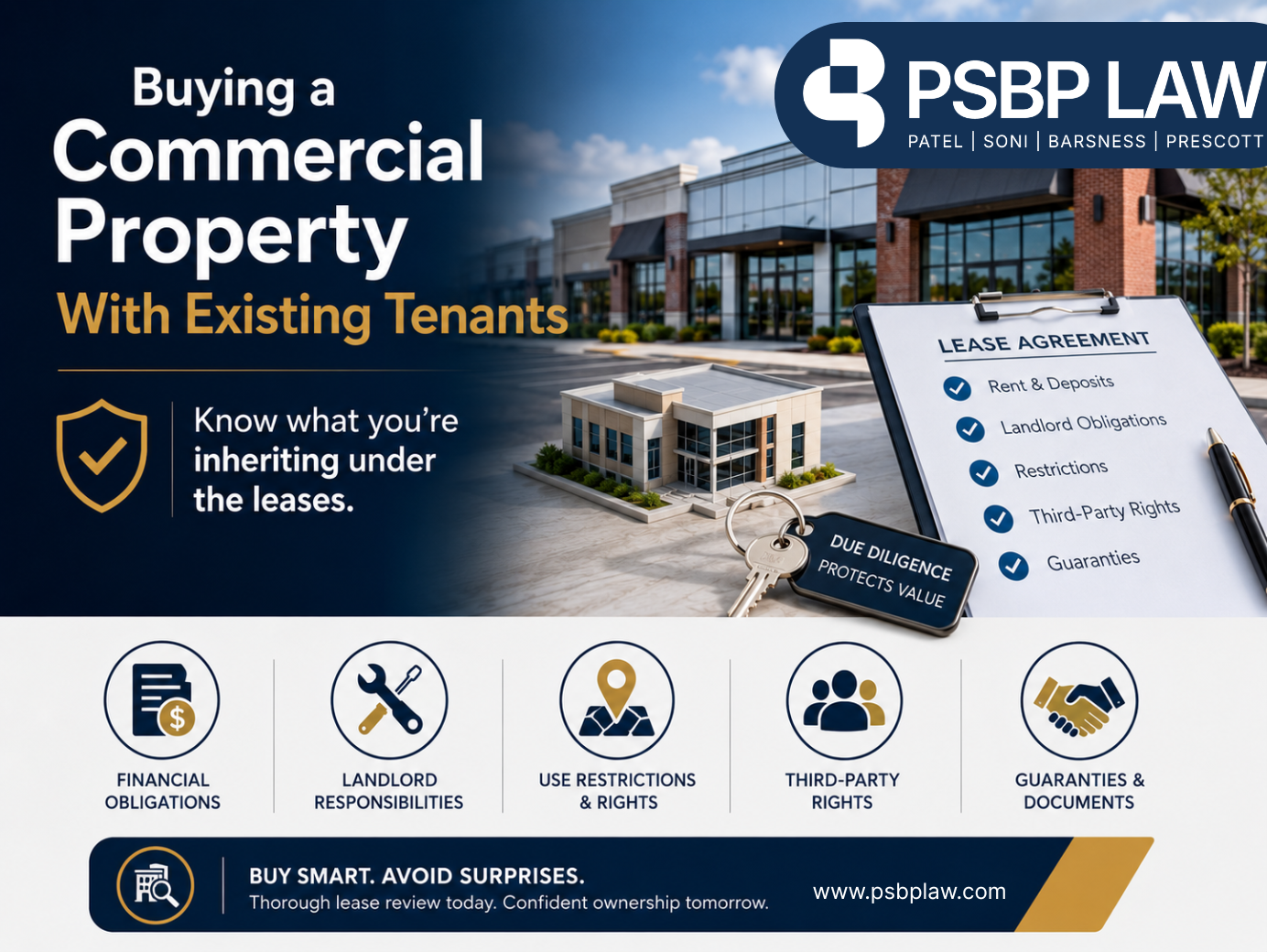
By acquiring the property, the buyer will generally step into the landlord’s position under the existing leases. The buyer may become responsible for payments the seller has not made, work the seller has not completed, restrictions affecting future leasing, and agreements with tenant lenders or franchisors. The lease review should identify not only what the tenants must pay, but also what the buyer may be required to pay, perform, or honor after closing.
-
Outstanding Payments and Credits
A tenant may already be open for business and paying rent even though the landlord still owes money under the lease.
Tenant improvement allowances are a common example. The lease may provide a maximum allowance, but the seller’s records may show only a partial payment. There may also be deductions for work performed by the landlord, outstanding reimbursement requests, or a final reconciliation that has not occurred.
The buyer should confirm the amount required under the lease, the amount paid, and whether the tenant may still submit additional costs. The same review should cover construction credits, signage allowances, moving expenses, and rent credits arising from late delivery or incomplete work.
Security deposits and prepaid rent should also be reconciled. The buyer should confirm the amount and form of each deposit, whether any portion has been applied, and how it will be transferred or credited at closing.
If an amount remains outstanding, the purchase agreement should state whether the seller will pay it before closing, provide a credit, fund an escrow, or remain responsible afterward. Otherwise, the buyer may begin ownership with an expense that was not reflected in its underwriting.
-
Landlord Work, Repairs, and Tenant Remedies
The fact that a tenant is open for business does not necessarily mean the landlord has completed all work required under the lease.
The seller may still be responsible for utility connections, plumbing, HVAC work, parking improvements, signage, or other items related to the tenant’s buildout. If the work was late or incomplete, the tenant may have rights to receive a rent credit, delay rent commencement, complete the work at the landlord’s expense, or pursue another remedy.
Ongoing repair obligations are equally important. A property may be marketed as triple net, but the leases determine what the landlord must maintain and which costs can be passed through to the tenants. The landlord may remain responsible for the roof, structure, parking areas, utility systems, or major equipment replacement. A lease may also cap increases in controllable operating expenses or exclude certain capital costs.
The buyer should pay particular attention to tenant self-help and offset rights. If a tenant can complete a repair after notice and deduct the cost from rent, an unresolved maintenance issue may become both an expense and a reduction in post-closing income.
The relevant question is not whether the property is generally described as triple net. It is what the buyer will actually be required to maintain, repair, and pay for under each lease.
-
Restrictions Affecting the Property and Nearby Parcels
Existing leases can restrict how the buyer leases and operates the property.
Exclusive-use rights are a common example. A restaurant tenant may prohibit the landlord from leasing other space to a competing concept, while a coffee tenant may have protection against another coffee shop. The buyer should review both the restricted use and the area covered by the restriction.
An exclusive may apply only to the building, or it may extend to the entire shopping center, future phases, outparcels, or adjacent property owned or controlled by the landlord. This can create a significant issue when the seller owns several parcels but the buyer is purchasing only one.
A tenant’s lease may prohibit a competing use on the parcel being sold and on an adjacent parcel the seller intends to retain. If the seller later permits a prohibited use there, the tenant may assert remedies against the buyer even though the buyer does not own or control the property where the violation occurred.
The purchase agreement should address how the restriction will be protected after closing. The seller may need to continue complying with the exclusive on retained property and bind future owners or tenants where appropriate.
Other lease rights may also affect the buyer’s plans, including renewal options, rights of first refusal, purchase options, parking rights, signage rights, and limits on redevelopment. These provisions should be reviewed together with the survey, legal description, site plan, title documents, and ownership of surrounding parcels.
-
Rights Held by Lenders, Franchisors, and Tenants
The landlord and tenant may not be the only parties with rights affecting the lease.
A tenant’s lender may be entitled to notice before the landlord terminates the lease, additional time to cure a tenant default, or access to the premises to remove collateral. A franchisor may have rights to receive default notices, enter the premises to protect its trademarks, assume the lease, or install a replacement franchisee. The landlord may also need the franchisor’s approval before agreeing to certain amendments, assignments, or subleases.
These agreements can limit how quickly or freely the buyer may enforce or modify the lease. They may also require a consent, notice, or acknowledgment in connection with the sale. Because these documents are often signed after the original lease, the buyer should request all agreements involving tenant lenders, franchisors, equipment lenders, and other third parties.
The buyer should also review the tenant’s remedies against the landlord. Some leases allow rent reductions, offsets, self-help, or termination if the landlord fails to provide required access, parking, utilities, maintenance, or other services.
-
Guaranties and Incomplete Lease Files
A guaranty may make a tenancy appear more secure, but the buyer should confirm what protection it actually provides.
Some guaranties remain in effect through the full lease term and any extensions. Others reduce or terminate after a stated period if the tenant has not defaulted. A guaranty may also be limited to a fixed amount, a certain number of months of rent, or liabilities accruing before a particular date.
The buyer should review the executed guaranty rather than relying on a rent roll or lease abstract stating that the lease is guaranteed. It should confirm who signed it, what obligations are covered, whether liability is capped, and whether the guaranty continues through renewal terms.
The buyer should also confirm that every required document was actually executed. A lease file may contain a blank guaranty, lender agreement, or other exhibit without the signed version. The lease, amendments, rent roll, abstract, payment records, and tenant estoppel may also contain inconsistent information about deposits, allowances, lease terms, or outstanding obligations.
Those discrepancies should be resolved before closing. The buyer should determine which documents control and what has actually occurred rather than assuming the seller’s summary is complete.
Addressing Lease Issues Before Closing
A useful lease review should lead to specific seller confirmations and closing protections.
Outstanding allowances can be paid, credited, or escrowed. Security deposits and prepaid rent can be transferred through the closing statement. Incomplete work can be finished before closing or allocated through an indemnity. Required third-party consents can be obtained as a closing condition, and restrictions affecting retained property can be addressed through continuing seller covenants.
Tenant estoppel certificates can help confirm the current rent, security deposit, outstanding landlord work, defaults, credits, and offsets. They should be compared against the lease documents, rent roll, payment history, and seller’s disclosures.
Purchasing a property with existing tenants can provide immediate income, but it can also place the buyer in the middle of obligations negotiated before the buyer became involved. Reviewing those obligations before closing allows the buyer to evaluate the property more accurately and avoid assuming liabilities that were not reflected in the purchase price or financial projections.
If you are purchasing a commercial property with existing tenants, we’re here to help review the leases and identify the obligations, restrictions, and potential liabilities that may continue after closing. Please feel free to reach out if you have any questions.