DHS Ends Automatic Extension of Employment Authorization Documents (EADs): What This Means for Immigrants and Employers
Introduction
In a sweeping policy shift, the Department of Homeland Security (DHS) has announced a new rule ending the long-standing practice of automatically extending Employment Authorization Documents (EADs) for certain renewal applicants. This change represents a significant departure from policies in place since 2016 and could have profound consequences for foreign nationals, employers, and the U.S. labor market at large.
Background
Historically, noncitizens in various immigration categories, such as those with pending asylum or adjustment-of-status applications, TPS holders, and certain dependent spouses, could continue working for up to 540 days beyond their EAD expiration if they filed a timely renewal.
This automatic extension was originally introduced in 2016 (180 days) and expanded to 540 days in 2024 to reduce the disruption caused by USCIS processing delays.
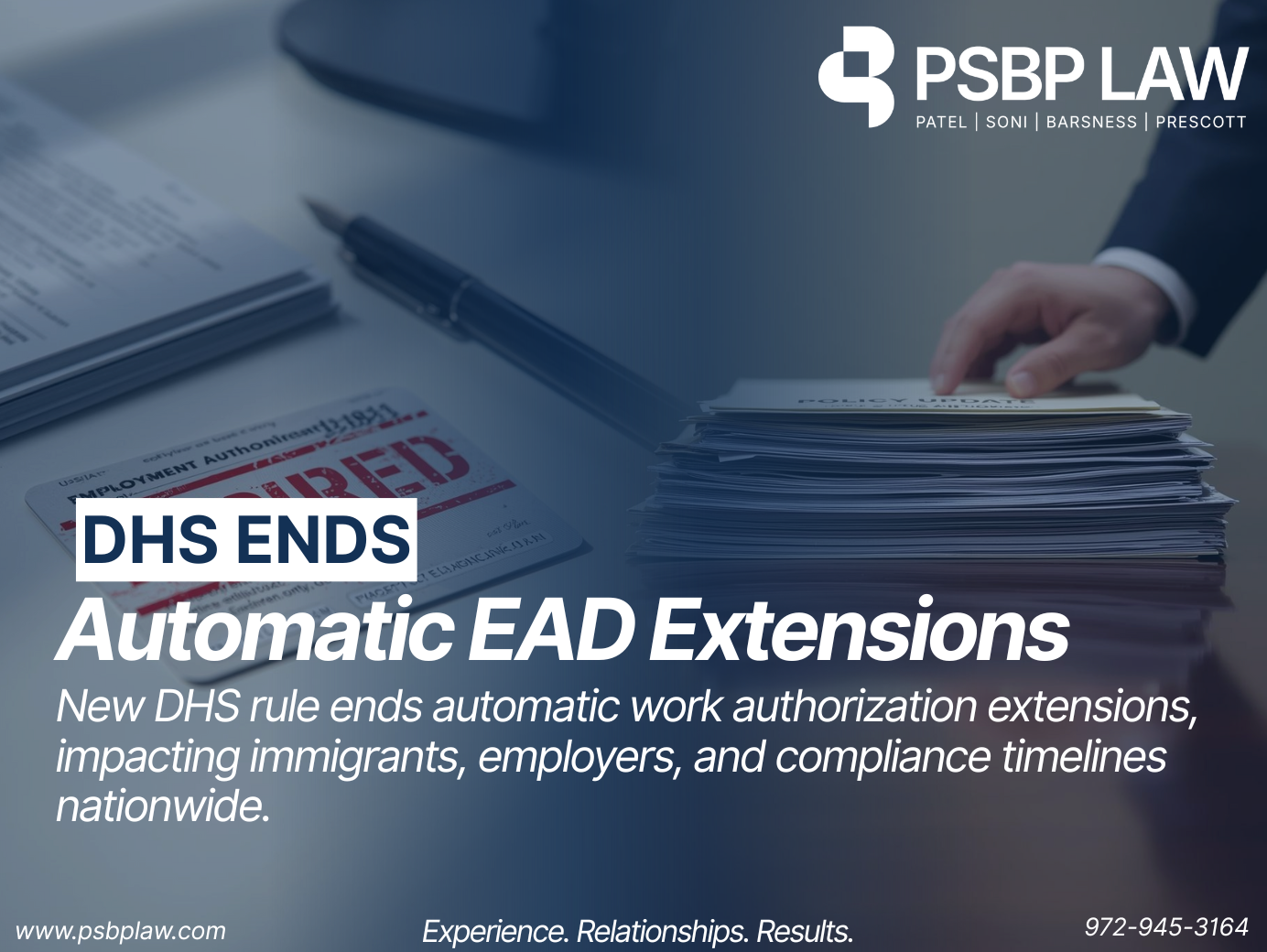
Under the new rule, automatic extensions will end entirely for applications filed on or after October 30, 2025. Renewal applicants will now only remain employment-authorized once their new EAD is formally approved.
DHS Rationale
DHS frames this change as a national security and vetting measure. The agency’s stated goal is to ensure that no employment authorization is extended without “proper vetting and full adjudication.” DHS claims that automatic extensions created “security vulnerabilities” that could allow individuals with unresolved derogatory information to continue working in the United States.
The rule also cites operational concerns, noting that prior policies encouraged “frivolous, fraudulent, or non-meritorious” filings and stretched USCIS resources thin. By removing automatic extensions, DHS aims to reallocate adjudicatory capacity toward security-based screening and fraud prevention.
Who Is Affected
This rule affects tens of thousands of foreign nationals who previously benefited from automatic extensions, including:
- Adjustment of Status applicants (category C09)
- Asylum applicants (C08)
- TPS beneficiaries and applicants (A12 / C19)
- H-4, L-2, and E-dependent spouses (C26, A17, A18)
Moving forward, if a renewal EAD is not approved before the current card expires, the employee will no longer be authorized to work, even if the renewal was filed on time.
Impact on Applicants and Employers
The implications are wide-ranging:
- Employment interruptions: Many noncitizens will face work stoppages between EAD expiration and approval, even for routine renewals.
- Employer compliance risks: Employers must immediately suspend work once an EAD expires. Continuing to employ someone without valid authorization may expose employers to penalties under Form I-9 regulations.
- Processing uncertainty: USCIS processing times already exceed six months in many categories, meaning a lapse in work authorization will become common unless renewals are filed very early.
- Collateral consequences: Lapses in EAD validity can disrupt driver’s license renewals, benefits eligibility, and professional licensing.
What Applicants Should Do Now
- File EAD renewals as early as possible.
USCIS typically allows filing up to 180 days before expiration — applicants should take advantage of the full window. - Track case status closely.
Use the USCIS online case tracker and ensure address changes are promptly updated. - Explore alternative work authorization bases.
Some individuals may have other pathways to continue working lawfully (e.g., underlying visa status with employment authorization). - Employers should audit I-9s and renewals.
HR and legal teams must ensure ongoing compliance, particularly for large workforces with multiple EAD holders.
DHS’s Broader Policy Direction
This move continues a broader pattern under the current administration of tightening discretionary immigration benefits, emphasizing “security vetting” over processing efficiency. DHS explicitly links this change to concerns about “bad actors” and “unmanageable influxes” of parole and asylum cases, signaling a shift away from humanitarian accommodation toward stricter enforcement.
Conclusion
The end of automatic EAD extensions will create real-world hardship for law-abiding immigrants and U.S. employers who depend on their contributions. While DHS’s stated goal of safeguarding national security is understandable, the practical impact will likely be lost income, staffing shortages, and administrative backlogs.
Until processing times stabilize, both applicants and employers must act proactively, filing renewals early, tracking expirations, and seeking legal guidance to avoid unauthorized employment gaps.
Because this rule attempts to bypass the public notice and comment period, it will most likely be subject to a challenge in federal court. Further updates on this will be provided as developments arise.
If you have any questions about the above, please contact Chris Prescott at cprescott@psbplaw.com.