When funding an EB-5 investment, investors may rely on money received from their family members or friends. These transfers generally fall into one of two categories: a loan or a gift.
While both may be acceptable sources of investment capital, they are not interchangeable terms. The way a transaction is characterized should also accurately reflect what actually occurred, as USCIS closely reviews these transfers to ensure they are genuine, properly documented, and consistent with the supporting evidence.
Regardless of whether the funds are received as a loan or a gift, USCIS requires that the funds be fully sourced and traced back to a lawful origin.
What Is a Good Faith Loan?
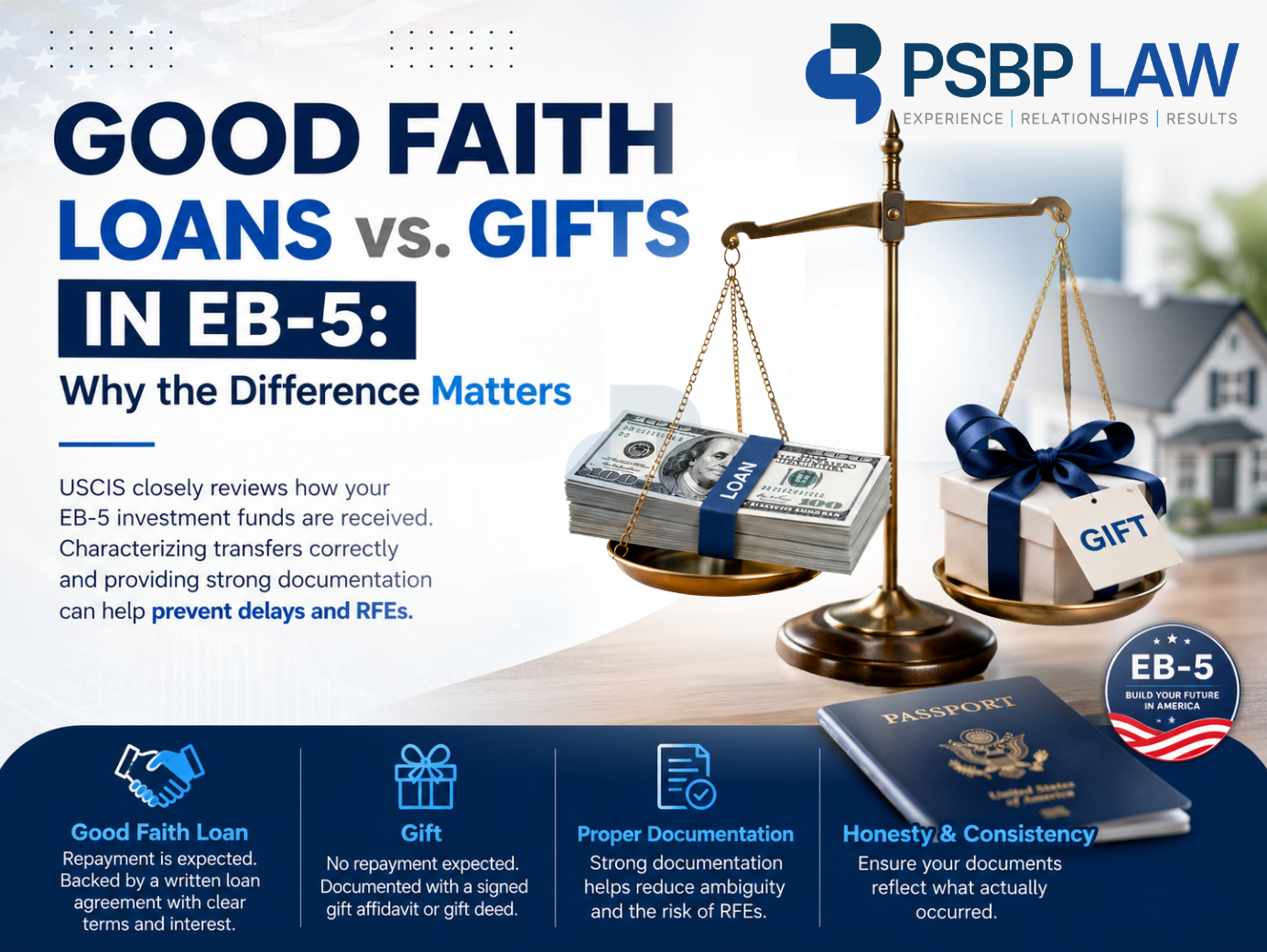
A good faith loan is a transfer of funds with the understanding that the borrower/EB-5 investor will repay the lender. In other words, the lender expects to be paid back, and the borrower accepts that obligation. Simply calling a transfer a “loan” is not enough. USCIS requires evidence that the parties intended to create a legitimate lending arrangement before the funds were transferred.
A bona fide loan is typically supported by a written loan agreement or promissory note that outlines the amount borrowed, repayment terms, and applicable interest.
What Is a Gift?
A gift is fundamentally different from a loan because there is no expectation of repayment. Once the funds are transferred, ownership passes entirely to the recipient, and the donor does not expect the money to be returned in the future.
Gifts are commonly documented with a signed gift affidavit or gift deed. This document confirms that the donor voluntarily transferred the funds, that the gift is irrevocable, and that no repayment is expected. Like loans, gifts must still be supported by documentation showing the donor’s lawful source of funds.
Why Proper Characterization Matters
The distinction between a loan and a gift may seem straightforward, but it is one of the areas where investors sometimes make avoidable mistakes.
Families often exchange money informally without written agreements and may later struggle to decide how the transaction should be presented in an EB-5 petition. The answer should always be based on the facts, not on which option seems easier to document.
If repayment is expected, the transaction should be treated as a loan. If repayment is not expected, it could be documented as a gift.
USCIS May Ask Questions Later
USCIS reviews not only the documents submitted but also whether the evidence is consistent with the parties’ actual intentions. If the nature of the transaction is unclear, USCIS may issue a Request for Evidence (RFE) asking for additional documentation or clarification.
For example, USCIS may ask whether repayment is expected, request a copy of a loan agreement, inquire why no written agreement exists, or seek clarification regarding the parties’ intentions. If a transfer was described as a gift but other evidence suggests repayment is anticipated, the inconsistency may require further explanation.
Providing a loan agreement or gift affidavit upfront helps clearly establish the nature of the transaction, reduces ambiguity, and can minimize the likelihood of unnecessary RFEs.
Similar questions can also arise years later during the I-829 petition to remove conditions on permanent residence. USCIS may revisit the original source of funds if new evidence indicates that a transaction characterized as a gift was later repaid or that an undisclosed repayment arrangement existed. Therefore, consistency throughout the life of the EB-5 case is essential.
Honesty Is the Best Approach
There is no advantage to forcing a transaction into one category if it does not accurately reflect reality. Both gifts and loans are acceptable sources of EB-5 investment funds when they are genuine and properly documented. The strongest source of funds cases are those that accurately reflect what actually occurred. Loan agreements, gift affidavits, and bank statements should all tell the same story. The key is ensuring that the transaction is accurately characterized from the beginning and supported by appropriate documentation.
If you have questions about EB-5 sources of funds, contact Attorney Jacqueline Treviño at jtrevino@psbplaw.com.