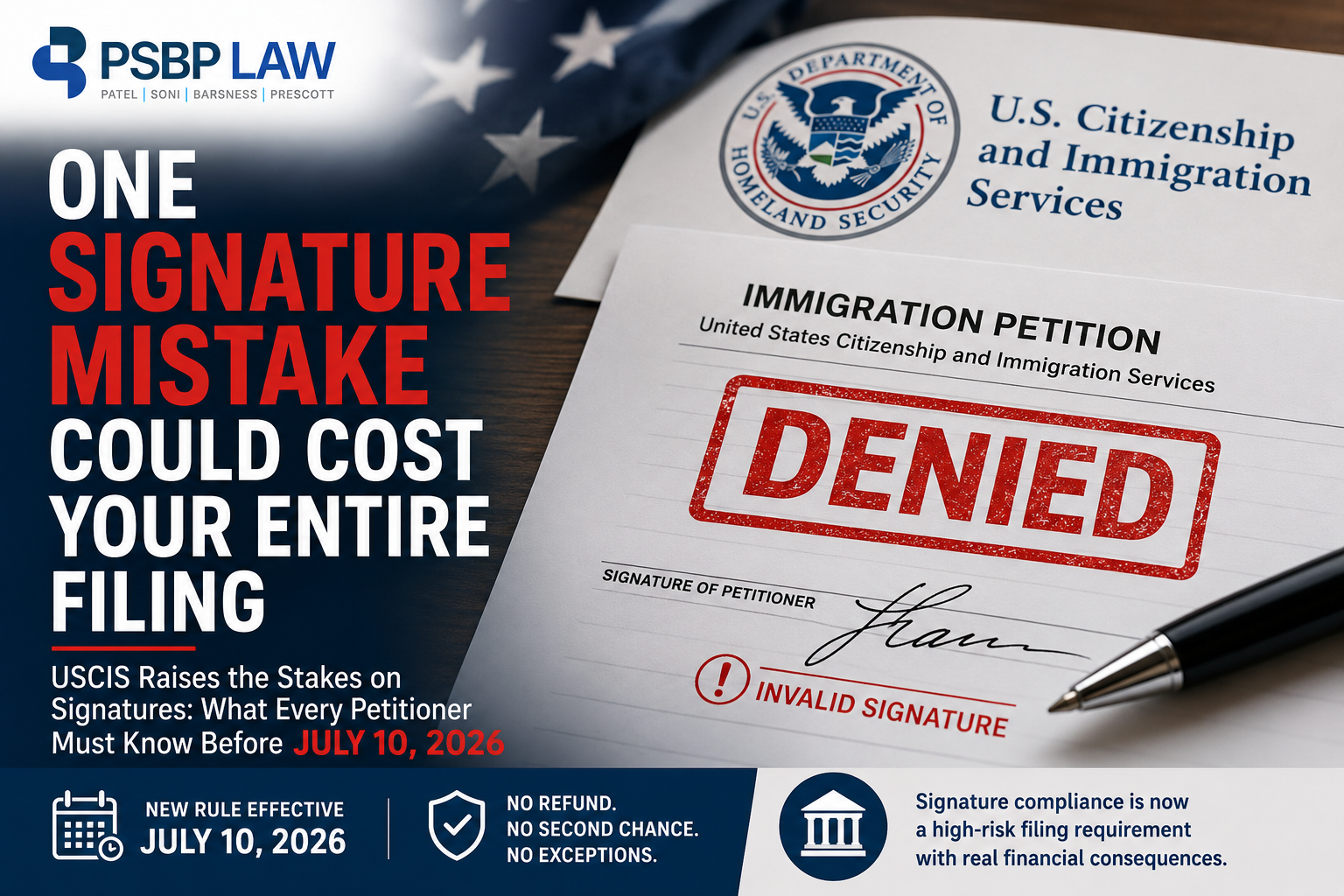
A single improper signature could now cost you your filing fee, your case, and precious time. On May 11, 2026, the U.S. Department of Homeland Security (DHS) published an Interim Final Rule that fundamentally changes how USCIS handles signature defects on immigration forms. Effective July 10, 2026, the rule gives USCIS officers explicit authority to not only reject, but outright deny, any benefit request found to contain an invalid signature, with no refund of filing fees and no opportunity to fix the error after submission.
What Changed and Why It Matters
Typically, USCIS would reject a filing if it was found to be defective, but this new rule means that USCIS will keep your fee and then deny the case if it is not properly signed. This means no second chances.
USCIS may now at their discretion:
- Reject a filing at intake (fees generally returned) if the signature defect is obvious; or
- Deny a filing during adjudication (fees not returned) if the defect surfaces later in review.
Valid vs. Invalid: Know the Difference
The rule does not change the definition of a valid signature, but it does make the consequences of getting it wrong far more severe. Here is where petitioners must pay close attention:
ACCEPTED formats:
- Original handwritten (wet-ink) signatures- the gold standard
- Scanned copies or clear photocopies of an original wet-ink signature
- Faxed versions of originally signed documents
- Electronic signatures within USCIS-authorized online filing systems only
PROHIBITED formats:
- Typed names in lieu of a handwritten signature
- Reused digital signature images copied and pasted across documents
- Signature stamps or software-generated signatures (e.g., DocuSign/Adobe Sign on paper-filed or PDF-uploaded forms)
- Signatures by unauthorized individuals — family members, employees without signing authority, or anyone not legally permitted to sign on behalf of the petitioner
Who Is Affected
The rule applies broadly to all immigration benefit requests submitted on or after July 10, 2026, including H-1B petitions, L-1 filings, employment-based Green Card cases (I-140), and adjustment of status applications (I-485). Employers who rely on remote or digital signing workflows for high-volume immigration filings should act now.
We regularly see employers copying and pasting signatures throughout H-1B filings. This practice is no longer acceptable, and if it is continued to be used could result in the case being denied and the loss of filing fees. Therefore, simple mistakes could end up costing employers and individuals thousands of dollars.
Conclusion
Starting July 10, 2026, signature compliance is no longer a minor technical issue. It is now a high-risk filing requirement with real financial consequences. A copied signature, unauthorized signatory, or improperly executed form could result in USCIS denying the case outright, retaining thousands of dollars in filing fees, and potentially jeopardizing critical immigration timelines.
Make no mistake, USCIS has now been given discretion to either reject or deny improperly signed filings. In practice, many employers and attorneys are concerned that USCIS may increasingly choose denial over rejection because denial allows the agency to retain filing fees. Whether that proves true remains to be seen, but the risk to petitioners is now significantly higher.
Employers, HR teams, and legal representatives should immediately review their signing procedures. What may have previously been viewed as a harmless administrative shortcut could now become an expensive mistake.
If you have questions regarding the new signature requirements or your company’s immigration filing procedures, contact PSBP Law Partner Chris Prescott at cprescott@psbplaw.com.