In today’s market, fund managers regularly find themselves needing additional capital and thinking they should send a capital call notice to existing investors. This sounds simple, and sometimes this is the right approach, but often what the fund manager wants is not a capital call at all and is actually a new offering. The consequences of treating a new offering like a capital call range from a correctable compliance problem to an unregistered offering of securities, exposing the issuer and manager to SEC enforcement.
Here’s what fund managers need to understand before sending a capital call notice:
What a Capital Call Is
A capital call is where you call capital that investors are already obligated to contribute. Most commonly, when investors sign their subscription agreement, they make a commitment to fund up to a certain amount of capital over time, and a capital call is simply an exercise of the fund manager’s contractual right to collect on that already agreed upon capital commitment. However, an investor’s obligation to contribute is not always limited to just the amount stated in a subscription agreement. The operating agreement, limited partnership agreement, or other governing documents may independently authorize the fund manager to make capital calls that all investors are obligated to fund as mandatory contributions, and this obligation may extend beyond any prior capital commitment set out in a subscription agreement. In either case, no new investment decision is made, no new securities are issued, and the investor has already agreed to the terms, so the contribution remains a capital call rather than a new offering. Whether the obligation arises from the subscription agreement, the governing documents, or both, the key is that the manager is collecting capital that investors are already required to provide on the same terms as the original securities issued.
Under these circumstances, since no new offering is occurring and the terms all remain the same, additional securities law requirements are not triggered. However, where the transaction looks like a new offering of a different kind of security, there are significant issues with treating that as a capital call.
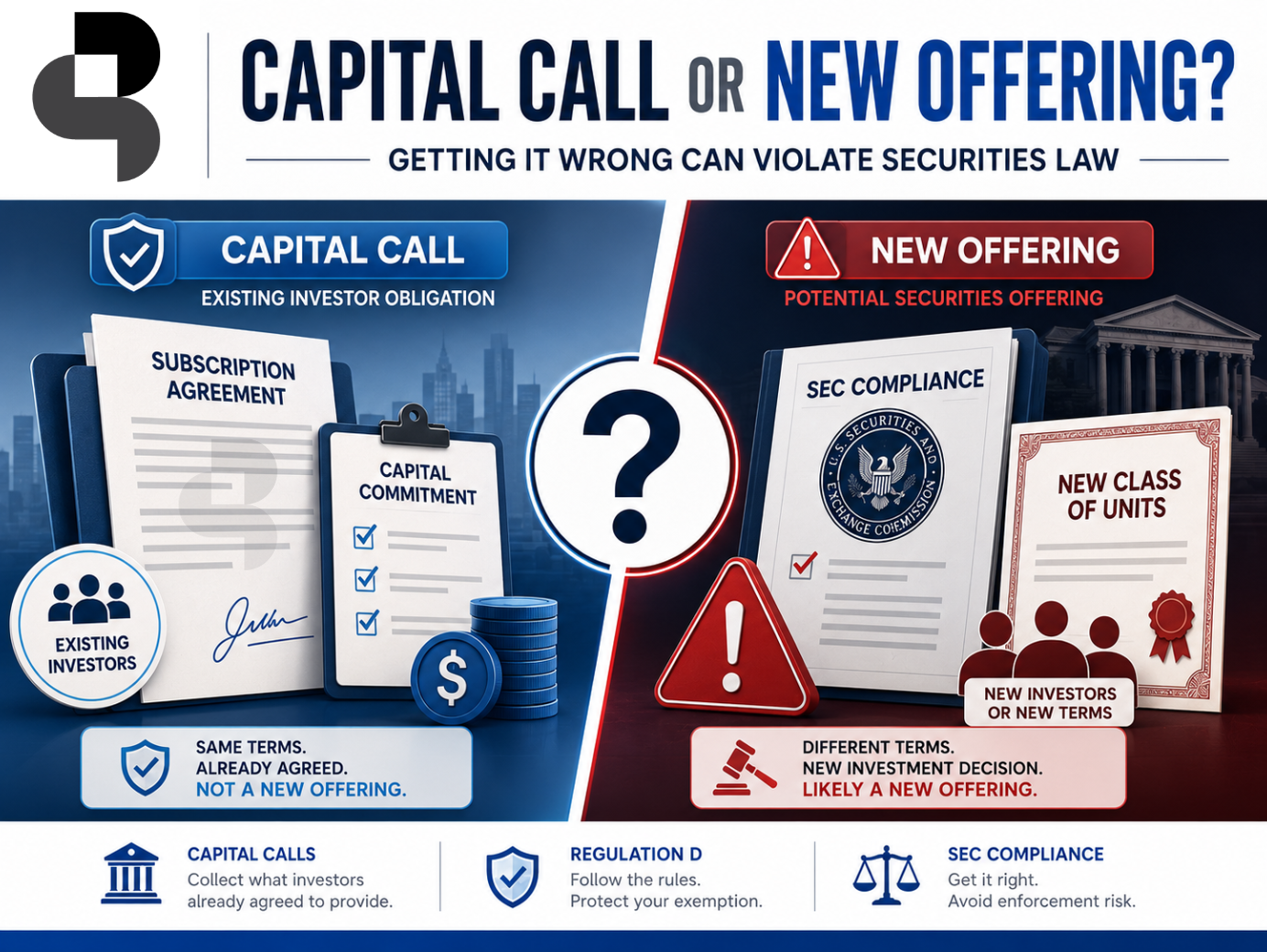
When Additional Capital Contributions Are No Longer Considered a Capital Call
The threshold question is simple: are investors contributing capital they already agreed to contribute on terms they already agreed to? If they are, then it’s a capital call, but if they are not, you may have a new offering. Below are the scenarios we see most often where fund managers get this wrong:
-
The Fund Manager Is Raising Capital Beyond What the Governing Documents Authorize: Where fund managers raise capital beyond what investors are already obligated to contribute, this is likely a new offering. The obligation to contribute may come from unfunded capital commitments in a subscription agreement, or it may be created by the operating agreement, limited partnership agreement, or other governing documents that authorize the manager to make mandatory capital calls beyond any prior commitment, all on the same terms as the original securities. If none of the governing documents expressly authorize the additional contributions on the same terms, the additional capital would likely be considered a new investment and treated as a new offering. This is especially true where the offering and governing documents are silent on the issue.
-
The Fund Manager Offers a New Class. If a fund manager needs additional capital and decides to create a new or preferred class with priority returns, senior distribution rights, or any structure with economics or rights that differ from what existing investors received, that is a new offering. Even if the new class is offered only to existing investors, a new and different type of security is being issued which is considered a new offering.
-
The Fund Manager Offers Debt. Sometimes fund managers mistakenly believe that if they issue promissory notes instead of equity that such issuance is not considered a new offering of a new security. However, bridge notes, promissory notes, or other loans from the investors to the fund are debt securities which require compliance as a new securities offering if not already structured under the existing documents.
-
The Fund Manager Raises Capital From New Investors: If the fund manager admits new investors to the fund after expiration of the offering period, they may be conducting a new offering. Often, after a certain period of time, your fund documents may need to be updated to reflect changes and admit the new investor in a compliant manner.
-
The Fund Manager is Changing Terms. If the fund manager needs to raise additional capital but the existing fund documents do not authorize such admission or the terms will need to be amended in any material way, the original documents likely do not cover that scenario and investor consent may be required.
Why This Distinction Matters
Private offerings rely on an exemption from SEC registration, with Rule 506(b) or Rule 506(c) under Regulation D being the most common. Such exemptions have specific requirements that must be followed and if a fund manager conducts a new offering under the guise of a capital call, they skip all of those steps. If the SEC or an upset investor later scrutinizes the transaction, the absence of compliance with exemption requirements create serious consequences and may constitute an unregistered offering of securities. Where an unregistered securities offering occurs, investors have rescission rights and fund managers may face significant exposure to SEC enforcement actions.
Additionally, depending on how the existing offering documents are written, existing investors may have claims against the fund and fund manager if they are adversely affected and the original terms they agreed to are not honored.
Framework to Follow Before Sending a Capital Call Notice
Before making a capital call or raising additional capital from investors, below are some questions to ask yourself:
- Is every investor already an existing investor of the fund?
- Are investors being asked to fulfill unfunded capital commitments or do the governing documents independently authorize the fund manager to make capital calls that all investors are required to fund?
- Are the economics and terms identical to what investors originally agreed to?
- Do the fund documents authorize the additional capital?
- Are you still within the original offering period without any material changes from the original documents?
If the answer to any of these questions is no, you may actually be conducting a new offering rather than making a capital call. If in doubt, it’s best to contact a qualified securities attorney to ensure that the proper process is followed.