On July 2, 2026, U.S. Citizenship and Immigration Services (USCIS), under the Department of Homeland Security (DHS), published a formal proposed rule to codify the EB-5 Reform and Integrity Act of 2022 (RIA).
The RIA is a statute that Congress enacted in March 2022, and its core provisions, including investment thresholds and regional center reforms, have been legally binding since then. What USCIS has not yet done, however, is formally update its own regulations to reflect the RIA. In the years since 2022, USCIS has largely implemented the law through informal policy guidance rather than a finalized regulatory framework. This proposed rule represents the agency’s first comprehensive attempt to close that gap by translating the RIA into binding, formal federal regulations.
It is important to note that this is a proposal only; no changes are currently in effect. The public comment period remains open until August 31, 2026, after which USCIS must review submitted feedback before issuing a final rule. EB-5 professionals anticipate that a final rule may not be published until sometime in 2027. Until then, existing EB-5 regulations and investment requirements remain in effect.
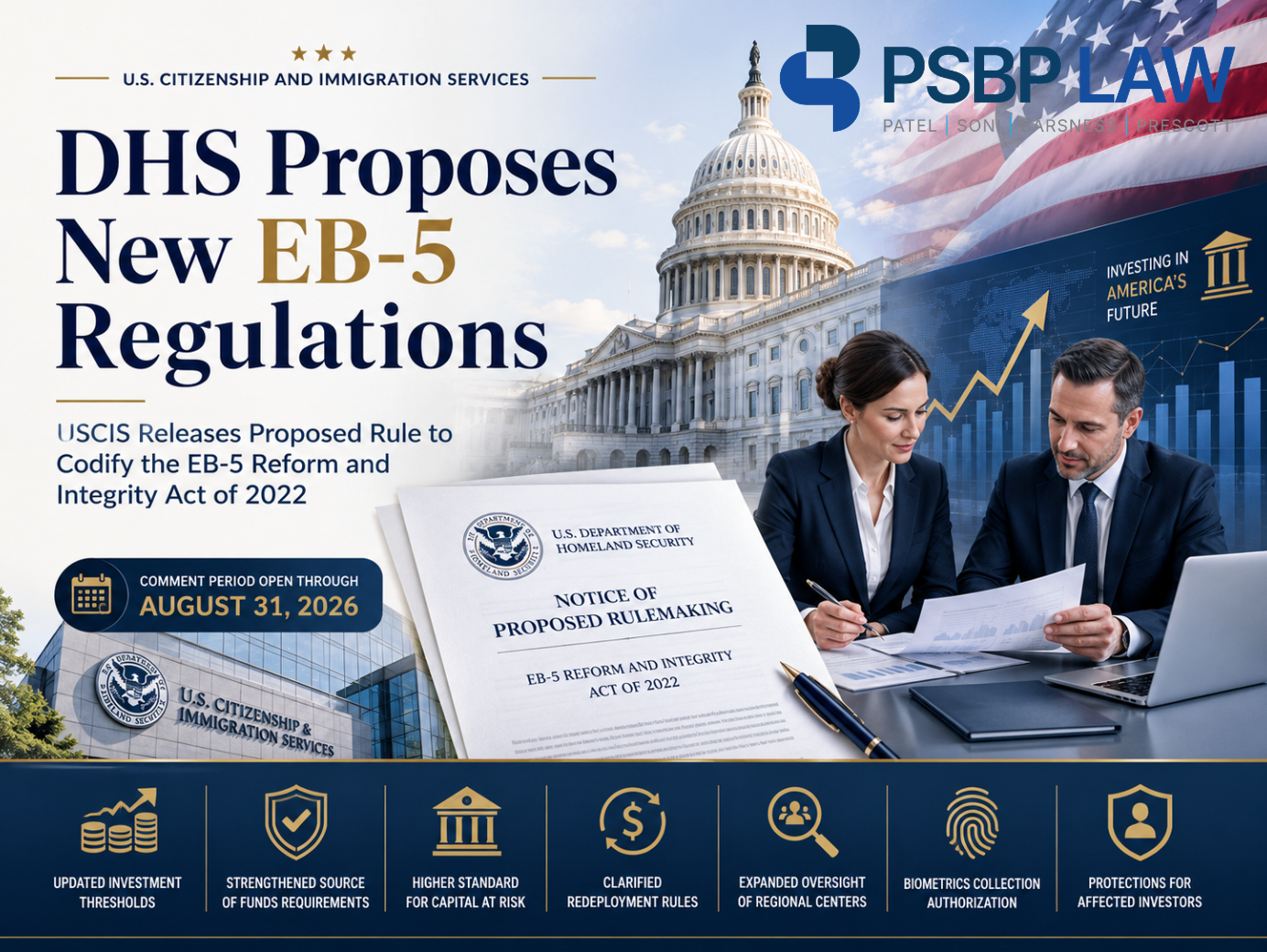
Major Proposed Changes
-
A new, higher investment tier: Current EB-5 rules require a minimum investment of $1.05 million, or $800,000 for projects located in rural, high unemployment, or infrastructure areas. The proposed rule would introduce a new category called High Employment Areas for projects that do not qualify for the reduced threshold. Investors in these areas would be required to invest $1.4 million rather than $1.05 million.
-
Stricter requirements for source of funds: The proposal provides significantly more detail on what qualifies as legitimate investment capital, including:
-
Only cash and tangible assets with a clearly determinable fair market value would qualify; intangible assets such as patents or trademarks would not, given the difficulty of establishing their value.
-
Capital held in trust would generally need to be held in a revocable trust over which the investor maintains full control.
-
Loans secured by the assets of the enterprise being invested in would not qualify as the investor’s own capital.
-
Digital assets, including cryptocurrency, digital tokens, and stable coins, may continue to serve as a lawful source of funds; however, USCIS is seeking public comment on whether such assets should be subject to additional evidentiary standards.
-
-
A higher bar for demonstrating capital “at risk”: Under the proposed rule, DHS proposes that investors must show more than a mere intent to invest at some point in the future. Investors would be required to demonstrate that their capital has been committed and placed at risk by the time they obtain conditional permanent residence.
-
More clearly defined redeployment rules: When an original EB-5 project repays its investors ahead of schedule, “redeployment” refers to the process of reinvesting that capital into a new qualifying project to preserve the investor’s immigration status. The proposed rule narrows the circumstances under which redeployment is permitted, which is expected to reduce ambiguity for investors navigating this process.
-
Expanded oversight of regional centers: Regional centers, the entities that pool investor capital into qualifying projects, would be subject to mandatory audits at least once every five years, increased site visits, and a more clearly defined enforcement framework, including monetary penalties, suspension, and permanent debarment for noncompliance.
-
Formal authorization for biometrics collection: USCIS would be expressly authorized to collect biometric data, including fingerprints, as part of the EB-5 adjudication process, consistent with the agency’s broader practice across immigration benefit categories.
-
Clarified protections for affected investors: If a regional center is terminated or a project is debarred from the program, the proposed rule outlines a clearer path for investors to retain their priority date while securing a new qualifying investment, provided appropriate steps are taken to preserve eligibility.
Recommended Next Steps
Stakeholders should monitor developments through the comment period through August 31, 2026, as public input may still influence the final rule. Current investment thresholds and regulatory rules remain in effect until a final rule is published, a process not expected to conclude before late 2026 at the earliest.
To read the Notice of Proposed Rulemaking published by DHS/USCIS in the Federal Register, click here.
If you have questions about EB-5, contact Attorney Jacqueline Treviño at jtrevino@psbplaw.com.