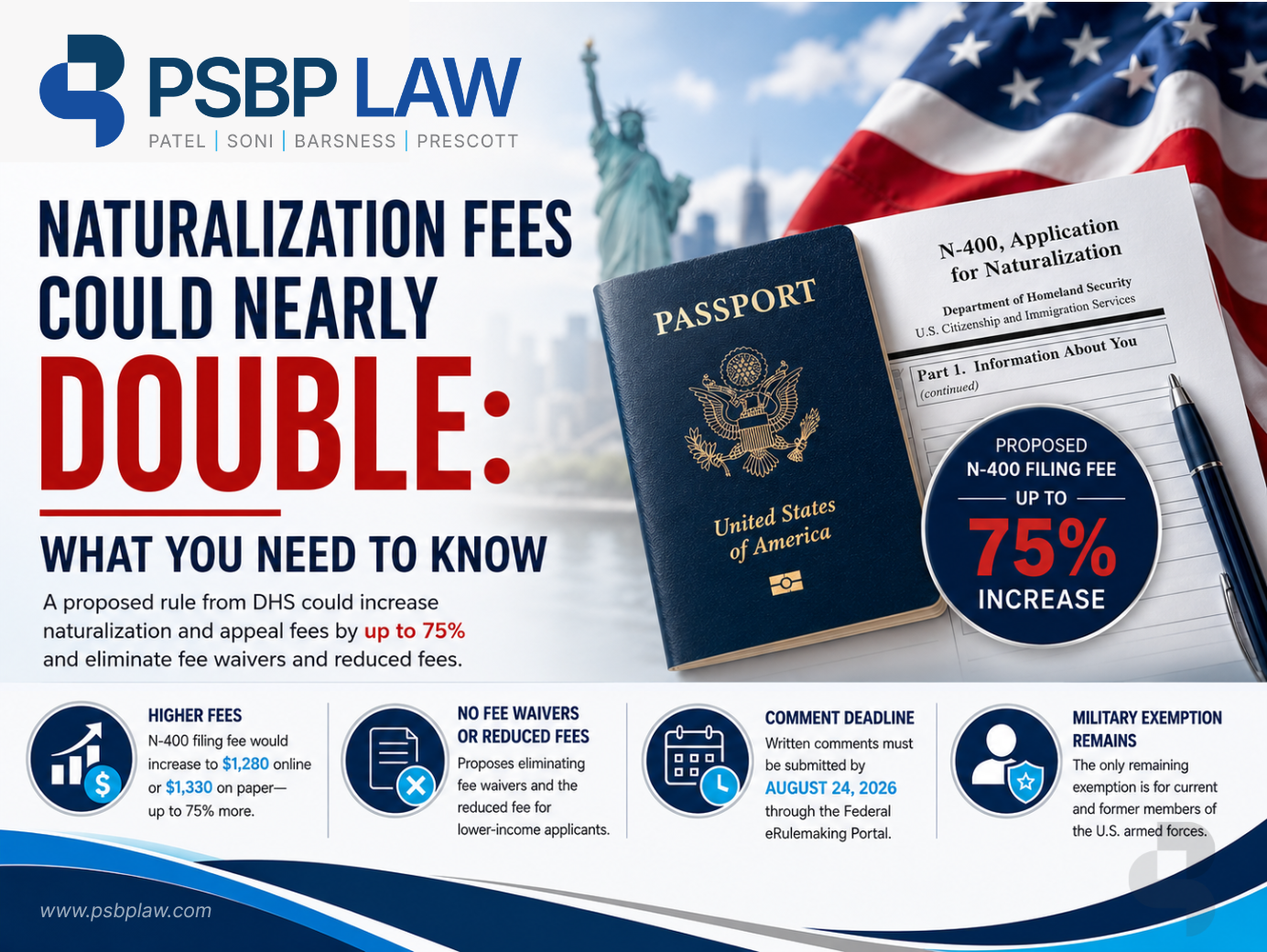
On June 22, 2026, the Department of Homeland Security published a Notice of Proposed Rulemaking that would dramatically increase the cost of applying for naturalization and eliminate the financial assistance options that have long helped lower-income applicants pursue citizenship.
What Is Being Proposed?
Under the proposal, the filing fee for Form N-400, Application for Naturalization, would increase to $1,280 for online filings and $1,330 for paper filings. To put that in perspective, the general paper filing fee is currently $760, meaning the proposed increase amounts to $570, or 75%. For those who file online, the fee would jump from $710 to $1,280.
The proposal also affects applicants who are appealing a naturalization denial. The N-336 appeal fee would rise from $830 to $1,475 on paper, or from $780 to $1,425 online.
Fee Waivers and Reduced Fees
Perhaps the most significant aspect of this proposal is the elimination of financial assistance options. USCIS would also eliminate the reduced fee currently available to some lower-income applicants and end fee waivers for both naturalization applications and naturalization appeals.
Right now, applicants with demonstrated financial hardship can request a full fee waiver, and a reduced $380 filing fee is available for some applicants earning up to 400% of the federal poverty guidelines. Both would disappear under the proposed rule. For some eligible permanent residents, that could mean paying more than three times what they would pay today. The only remaining exemption would be for current and former members of the U.S. armed forces applying for naturalization under military service provisions.
Is This Final?
Not yet. Written comments must be submitted on or before August 24, 2026, through the Federal eRulemaking Portal. After the comment period closes, DHS will review public feedback and may revise the rule before issuing a final version. Current fees, fee waivers, and reduced-fee options remain in place while this process plays out.
What Should You Do Now?
If you are a lawful permanent resident who is eligible for naturalization, this is the time to evaluate whether to file. Filing before any final rule takes effect locks in the lower cost but eligibility requirements still apply.
At PSBP Law, we help clients assess their readiness and navigate the naturalization process from start to finish. If you have questions about whether now is the right time to file, we encourage you to reach out for a consultation.
The information in this article is for general educational purposes and does not constitute legal advice. Immigration law is complex and fact-specific. Questions? Please consult with Attorney Natalia Meade at nmeade@psbplaw.com.