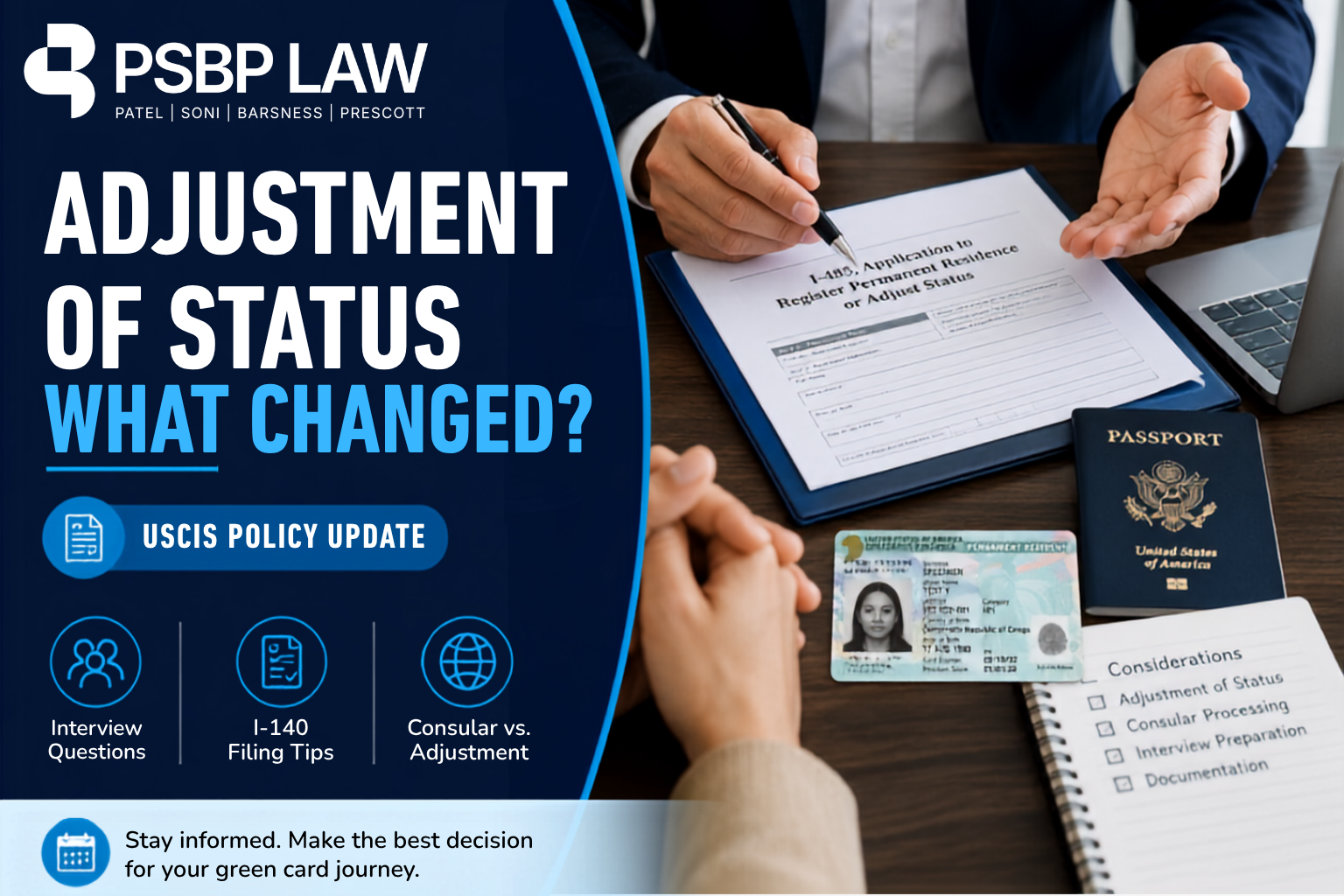
Last month USCIS issued a controversial memo suggesting that Adjustment of Status was a form of extraordinary relief and that individuals wanting to pursue a green card should leave the US to Consular Process. As you can imagine this memo sparked fear and chaos throughout the immigration community and many Attorneys started to talk about filing lawsuits. Fearing a lawsuit was imminent USCIS back tracked on the memo and stated that many immigrants in the US would still be able to remain in the US to obtain their green card.
Shortly after the memo was issued there were reports of USCIS officers asking some additional questions at adjustment of status interviews, namely the following:
- Why did you apply for AOS instead of Consular Processing?
- Are there any factors that would prevent you from pursuing CP?
- Do you have any family still living there?
- Why did you decide not to return to your country when your period of authorized stay expired?
However, as with all things Immigration, there is no consistency, with some officers asking questions at interviews and some officers not asking anything additional at all. There is no leg2al requirement for an individual to consular process instead of applying for adjustment and the additional hassle and expense of travelling home coupled with consular delays should be sufficient justification for choosing to adjust.
However, it is still early days, with the memo only being only just over one month old meaning that the full extent of the impact may not have been felt.
Tips on filing your I-140
When an employer files an I-140 the form asks whether they intend to adjust status or go through consular processing. If you choose adjustment and later want to consular process, you have to file Form I-824, to get the approved I-140 sent to the NVC along with an additional fee of $590.00. The current processing time for this form is approximately 12 months. However, if you initially check consular processing and later decide to adjust there is no additional fee.
Therefore, it is recommended that you indicate consular processing on Form I-140 when asked how you will obtain your green card. That way if you hear horror stories of people being denied through adjustment you can quickly switch to consular processing. Alternatively, if your adjustment gets denied under the memo you can consular process your case immediately without having to file I-824.
This recommendation is purely to protect against the potential risks and impact of the new memo. Despite these questions being asked by certain officers there are still reports of approvals and as stated above some officers are not even asking these questions.
Conclusion
Confusion and uncertainty continue to define the current administration’s approach to immigration. The apparent objective is to discourage people from coming to the United States or even from remaining here to pursue legal immigration benefits. Rather than changing the law through Congress, agencies can issue policy memoranda that have the potential to alter how existing laws are applied. Even if those policies are ultimately found to be unlawful, it can take months or even years before the courts intervene. By then, the uncertainty and disruption have already had their intended effect.
There are still 940 days remaining in the Trump administration. Expect to see additional policy memoranda and procedural changes that test the limits of existing immigration law and, in many cases, make legal immigration more difficult. The best protection is to stay informed, understand what the law actually says, and seek qualified legal advice before making important immigration decisions.
If you have any questions regarding the above, please contact PSBP Law Partner Chris Prescott at cprescott@psbplaw.com.