In many commercial real estate transactions, the first written agreement between a buyer and seller is not the purchase and sale agreement. It is a letter of intent, commonly referred to as an LOI.
An LOI is often only a few pages long and is generally intended to be non-binding, with the exception of certain provisions such as confidentiality or exclusivity. Because the parties expect to negotiate a more detailed purchase agreement later, it can be easy to treat the LOI as simply a preliminary step used to agree on the purchase price and move the deal forward.
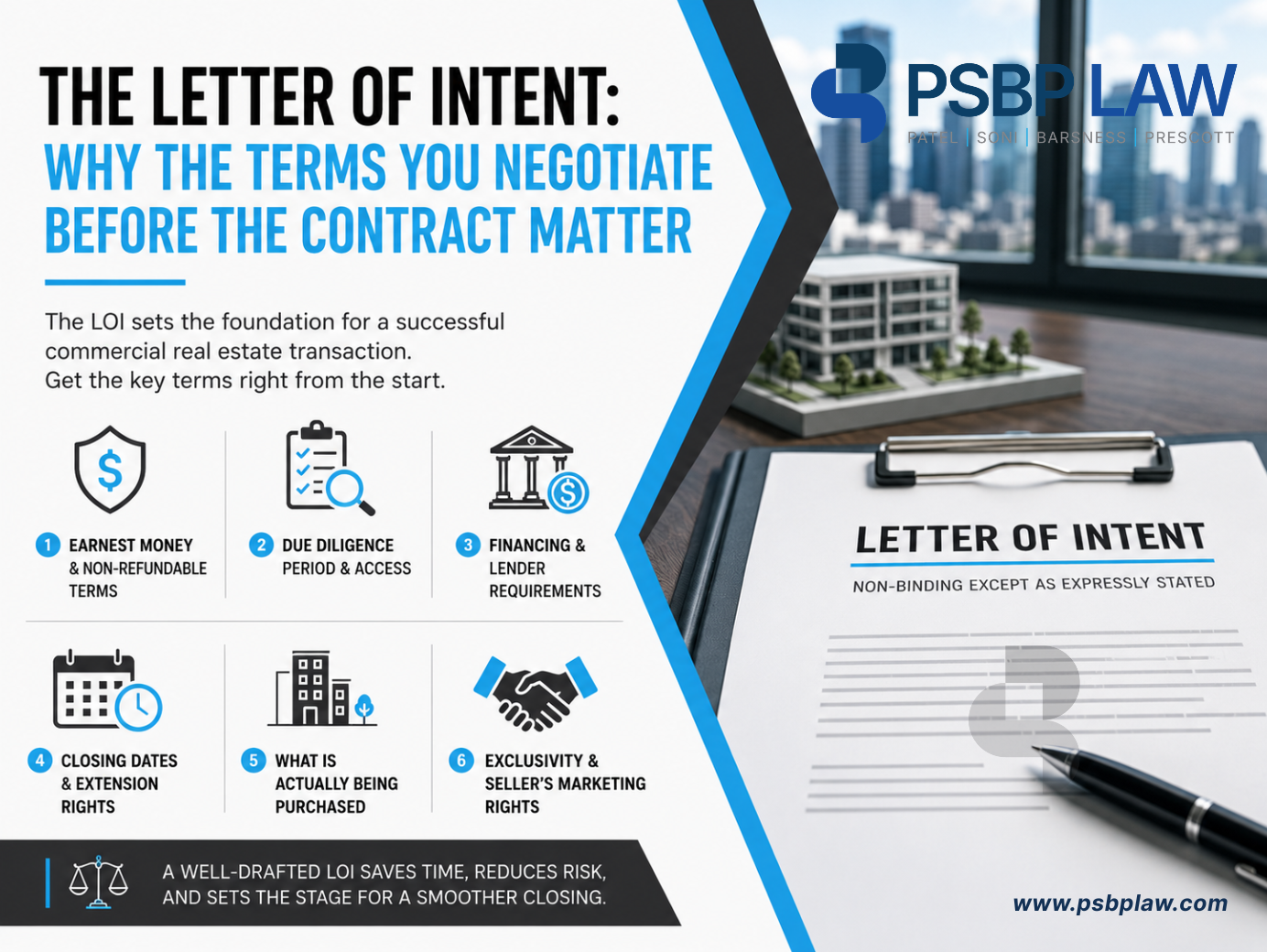
In practice, however, the LOI often establishes the framework for the purchase agreement that follows. Purchase price is important, but so are the terms governing the earnest money, due diligence period, financing, closing timeline, and other rights that determine whether the buyer can complete its investigation and whether either party can walk away from the transaction.
Addressing those issues at the LOI stage can make the purchase agreement easier to negotiate and reduce disagreements over what the parties originally intended.
-
Earnest Money and When It Becomes Non-Refundable
An LOI may state that the buyer will deposit a certain amount of earnest money after signing the purchase agreement. That does not necessarily answer the more important questions about what happens to that money during the transaction.
The parties should consider when the earnest money must be deposited, whether it is refundable during the due diligence period, when it becomes non-refundable, and whether additional earnest money is required if the buyer extends a deadline.
For example, an LOI might provide for a $100,000 earnest money deposit. The purchase agreement still has to determine whether the buyer can recover that deposit if it terminates during due diligence, whether some portion is non-refundable from the beginning, and what happens if the seller defaults or a closing condition is not satisfied.
If the parties have different expectations about those issues, waiting until the purchase agreement is being negotiated can create a dispute over a term that could have been addressed in the LOI.
-
Defining the Due Diligence Period
Providing a buyer with a certain number of days for due diligence is helpful, but the starting point for that period can be just as important as its length.
A 30-day due diligence period beginning when the purchase agreement is signed can operate very differently from a 30-day period beginning after the seller delivers the required diligence materials. If important leases, financial records, environmental reports, surveys, service contracts, or other documents are delivered late, the buyer may have significantly less time than expected to evaluate the property.
The LOI can also address the buyer’s access to the property and its ability to conduct inspections, environmental testing, engineering review, lease review, and other investigations.
The goal is not to negotiate every diligence provision before the purchase agreement is drafted. It is to make sure the parties agree on the basic structure and timing of the buyer’s investigation.
-
Financing and Lender Requirements
A buyer may intend to finance the acquisition even when the LOI does not say anything about financing.
If the buyer’s obligation to close is intended to depend on obtaining a loan, that should generally be addressed early. Otherwise, the seller may expect the buyer to close regardless of whether financing is ultimately available.
Even where there is no financing contingency, the transaction timeline should account for the practical requirements of the buyer’s lender. The lender may require an appraisal, environmental report, survey, title work, organizational documents, tenant information, or other items before it is prepared to fund the acquisition.
Financing can therefore affect more than the source of the purchase price. It can also affect the diligence period, closing date, required seller cooperation, and the buyer’s ability to extend the transaction if lender requirements are not completed on time.
-
Closing Dates and Extension Rights
An LOI will often provide that closing will occur a certain number of days after the due diligence period expires. That structure may work for a straightforward acquisition, but other transactions require additional flexibility.
A buyer may need additional time to finalize financing, obtain governmental approvals, complete a property condition review, or resolve a title or survey issue. The parties can address whether the buyer has a right to extend the closing date, how long an extension may last, and whether an additional deposit or extension fee is required.
The LOI should also make clear whether the closing date is fixed or tied to another event. A requirement to close 15 days after due diligence expires, for example, creates a different timeline than an outside closing date that remains unchanged even if another deadline moves.
Clarifying the timeline in the LOI gives both sides a better understanding of how long the property may be under contract and when they should expect the transaction to close.
-
Identifying What Is Actually Being Purchased
For some transactions, identifying the property is straightforward. For others, the acquisition involves more than a parcel of land and the building located on it.
An operating property may include leases, security deposits, service contracts, warranties, permits, plans, licenses, furniture, equipment, intellectual property, or other personal property. A hotel acquisition may involve franchise-related rights and operating assets, while a shopping center acquisition may involve multiple leases, guaranties, tenant deposits, and contracts.
If the parties have negotiated a purchase price based on the acquisition of an operating property, the LOI should provide enough detail to establish the general scope of what is included.
The purchase agreement can then address the mechanics of transferring those assets, including which contracts will be assigned, which will be terminated, and whether any third-party consents are required.
-
Exclusivity and the Seller’s Ability to Market the Property
Although most of an LOI may be non-binding, exclusivity provisions are often expressly binding.
A buyer may not want to spend money on attorneys, inspections, environmental reports, lenders, and other diligence while the seller continues negotiating with other potential purchasers. An exclusivity or “no-shop” provision can prevent the seller from soliciting or negotiating competing offers for a stated period while the parties work toward a purchase agreement.
The length and scope of that period matter. If exclusivity expires before the purchase agreement is finalized, the buyer may lose the protection while it is still negotiating the transaction.
For that reason, the LOI should clearly identify which provisions are intended to be binding and how long those obligations remain in effect.
Using the LOI to Set Up the Purchase Agreement
An LOI does not need to anticipate every provision that will eventually appear in a purchase agreement. Trying to negotiate the entire transaction in the LOI can defeat the purpose of using a shorter preliminary document.
The more useful approach is to identify the business and timing terms that could materially change the transaction if the parties have different expectations.
Purchase price is only one of those terms. Earnest money, due diligence, financing, extensions, closing timing, the assets being acquired, and exclusivity can all affect the value and feasibility of the deal.
A well-drafted LOI gives the parties a common framework before they begin negotiating the purchase agreement. It can shorten that negotiation, identify disagreements earlier, and reduce the possibility that a material business issue emerges only after both sides have already invested significant time and money in the transaction.
If you are considering buying or selling commercial real estate, we’re here to help with the LOI, purchase agreement, and the transaction through closing. Please feel free to reach out if you have any questions.